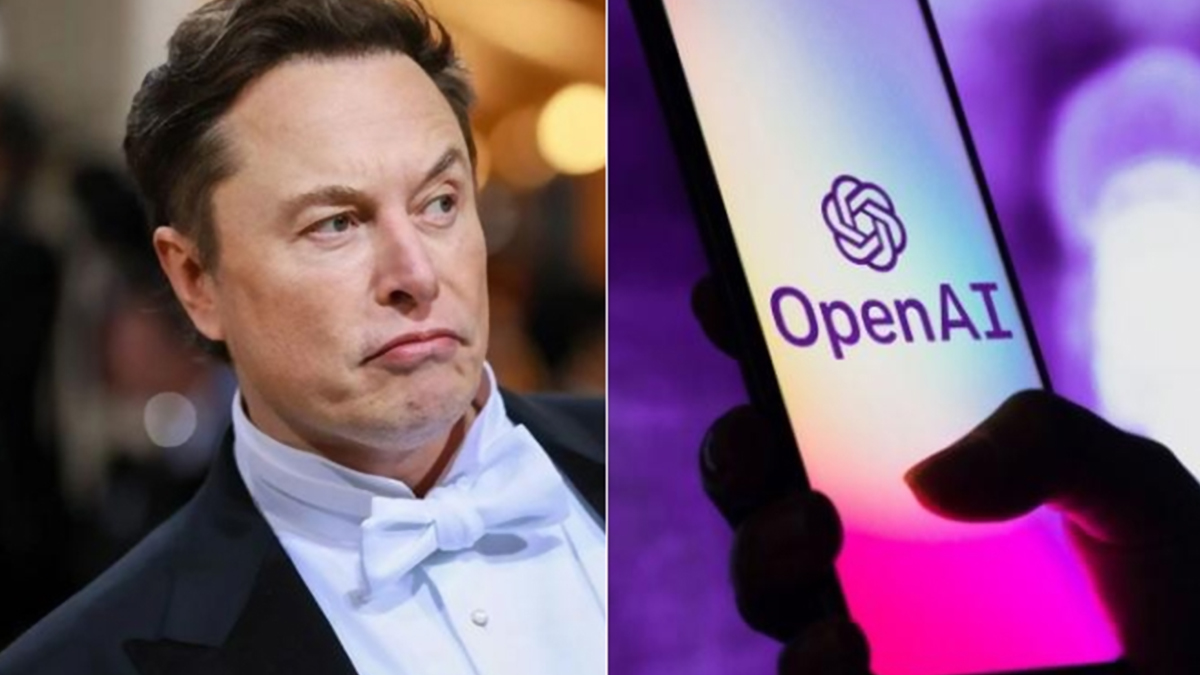
Elon Musk’s legal assault on OpenAI has escalated into one of the most dramatic and symbolically charged disputes in the modern technology sector, with damages claims that range from a staggering $79 billion to as much as $134 billion. First reported by Bloomberg, the lawsuit alleges that OpenAI, alongside its strategic partner Microsoft, abandoned its founding nonprofit mission and in doing so defrauded one of its original backers. While the sums involved are eye‑watering even by Silicon Valley standards, the case is less about money than about power, control, and the future direction of artificial intelligence.
At the heart of Musk’s damages calculation is an expert report prepared by C. Paul Wazzan, a seasoned financial economist who specializes in valuation and damages assessments in complex commercial litigation. According to his professional biography, Wazzan has been deposed nearly 100 times and has testified at trial more than a dozen times, often in cases involving multibillion‑dollar disputes. His analysis forms the backbone of Musk’s claim that he is entitled to a substantial share of OpenAI’s current valuation, which has been estimated at around $500 billion.
The Origins of the Dispute
OpenAI was founded in 2015 as a nonprofit research organization with an ambitious and idealistic mission: to ensure that artificial general intelligence would benefit all of humanity. Elon Musk was among the original co‑founders and early supporters, contributing approximately $38 million in seed funding during the organization’s formative years. At the time, OpenAI positioned itself as a counterweight to the growing concentration of AI research inside major technology corporations, promising openness, safety, and public benefit.
Over the years, however, OpenAI’s structure evolved. Facing the immense capital requirements of cutting‑edge AI research, the organization introduced a “capped‑profit” model and entered into a deep partnership with Microsoft, which today owns roughly 27% of the company. That transformation—from a pure nonprofit to a hybrid structure closely aligned with one of the world’s most powerful corporations—lies at the core of Musk’s complaint.
Musk’s legal team argues that OpenAI’s shift amounted to a betrayal of its original mission and that early contributors, including Musk himself, were misled about how the organization would ultimately operate. In their view, the company’s enormous current valuation is the direct result of intellectual, financial, and strategic contributions made during its nonprofit phase—contributions that Musk believes were never meant to be privatized or monetized on such a scale.
The Valuation That Shocked Silicon Valley
Wazzan’s damages analysis is striking not only for its scale but also for its methodology. Rather than focusing solely on Musk’s $38 million cash contribution, the report incorporates what it describes as Musk’s broader role in OpenAI’s early development. This includes technical guidance, strategic input, and the credibility his name and reputation brought to the fledgling organization at a time when artificial intelligence research was rapidly accelerating but still viewed with caution by many investors.
Based on this combined contribution, Wazzan concludes that OpenAI wrongfully gained between $65.5 billion and $109.4 billion in value, while Microsoft accrued additional gains ranging from $13.3 billion to $25.1 billion through its partnership and equity stake. From Musk’s perspective, these gains represent value that should, at least in part, flow back to him as an early founder and benefactor.
If accepted by the court, the analysis would imply an almost unfathomable return on Musk’s initial investment—roughly a 3,500‑fold increase. Such a figure underscores why the lawsuit has attracted intense attention across the tech and legal worlds. It is rare for disputes over nonprofit governance to intersect so directly with valuations of this magnitude.
A Question of Principle—or Control?
Publicly, Musk’s legal team frames the case as a matter of principle. They argue that early supporters of OpenAI were promised an organization committed to openness and public benefit, not one effectively controlled by a corporate giant with commercial priorities. In this telling, the lawsuit is about accountability and the enforcement of founding ideals in an industry increasingly dominated by profit‑driven incentives.
Critics, however, see the case differently. They note that Musk himself is no stranger to aggressive commercialization, having built and led companies that operate squarely within the competitive logic of global capitalism. To them, the lawsuit appears less like a moral crusade and more like a struggle for influence over one of the most consequential technologies of the century.
The scale of the damages demand feeds this skepticism. Even by Silicon Valley standards, a claim exceeding $100 billion is extraordinary. It sends a clear signal that Musk is prepared to challenge OpenAI not just legally, but symbolically, positioning himself as a central figure in the debate over who should control advanced artificial intelligence.
The Wealth Factor
Any discussion of the lawsuit inevitably returns to Musk’s personal fortune, which has reached levels previously unimaginable. His net worth currently hovers around $700 billion, making him by far the world’s richest individual. According to recent reporting cited by Reuters, Musk’s wealth now exceeds that of Google co‑founder Larry Page—the world’s second‑richest person—by approximately $500 billion.
This context complicates the narrative that the lawsuit is driven by financial need. Even a successful outcome at the upper end of the damages range would represent a relatively modest addition to Musk’s existing wealth. In November, Tesla shareholders separately approved a pay package for Musk valued at $1 trillion, the largest corporate compensation plan ever authorized.
Against this backdrop, OpenAI and its supporters argue that the lawsuit cannot reasonably be interpreted as a conventional investor grievance. Instead, they characterize it as part of what they describe as an “ongoing pattern of harassment,” aimed at undermining the company’s leadership and public standing at a critical moment in the development of AI technologies.
OpenAI’s Response
OpenAI has not remained silent. According to reports, the company recently sent a letter to investors and business partners warning that Musk is likely to make what it called “deliberately outlandish, attention‑grabbing claims” as the case proceeds toward trial. The message appears designed to reassure stakeholders while also framing the lawsuit as a distraction rather than a substantive threat.
From OpenAI’s perspective, the organization’s evolution was not only inevitable but necessary. Advanced AI research requires enormous computational resources, top‑tier talent, and sustained investment—requirements that few nonprofits can meet on their own. The partnership with Microsoft, they argue, provided the financial and technical backing needed to pursue ambitious research goals while still maintaining safeguards around AI safety and deployment.
OpenAI’s leadership also disputes the notion that its mission has been abandoned. They maintain that the company’s work continues to focus on broadly beneficial outcomes, even as it operates within a more commercially viable framework. In their view, Musk’s lawsuit misrepresents both the company’s intentions and its governance structure.
Microsoft’s Role
Microsoft, for its part, is a central but somewhat quieter figure in the dispute. As OpenAI’s largest strategic partner and a significant equity holder, the company stands to be affected by any ruling that questions the legitimacy of OpenAI’s current structure. Wazzan’s analysis explicitly attributes a portion of the alleged wrongful gains to Microsoft, reflecting the benefits it has derived from integrating OpenAI’s technology into its own products and services.
The case thus raises broader questions about the relationship between big tech companies and the AI research organizations they support. As corporations increasingly fund and absorb cutting‑edge research, the boundaries between public interest, private profit, and original mission statements become harder to define—and easier to contest in court.
Legal and Industry Implications
Legal experts say the case could set important precedents, particularly around the enforceability of nonprofit missions and the rights of early donors or founders when organizational structures change. If Musk’s claims gain traction, they could prompt greater scrutiny of hybrid nonprofit‑for‑profit models across the technology sector.
At the same time, the lawsuit highlights the growing legal risks surrounding AI development. As valuations soar and societal stakes increase, disputes that once might have been resolved quietly are now playing out on a global stage, with implications for investors, regulators, and the public alike.
The Road to Trial
The case is scheduled to go to trial in April in Oakland, California, approximately 15 miles east of San Francisco. The venue places the dispute squarely in the heart of the technology industry, both geographically and symbolically. Observers expect a closely watched proceeding, not only because of the personalities involved, but because of what the outcome could signal for the future governance of artificial intelligence.
Regardless of the final judgment, the lawsuit has already achieved one effect: it has reignited a public conversation about who controls AI, how its benefits should be distributed, and whether founding ideals can survive the gravitational pull of immense commercial value. In that sense, the battle between Elon Musk and OpenAI transcends any single damages figure, however large it may be.
As the trial approaches, one thing is clear: this is not merely a dispute between a billionaire and a startup he helped create. It is a referendum on the promises made at the dawn of the AI revolution—and on how those promises fare when confronted with unprecedented wealth, power, and technological possibility.