
Why “College Dropout” Is Becoming a Coveted Credential in Startup Culture

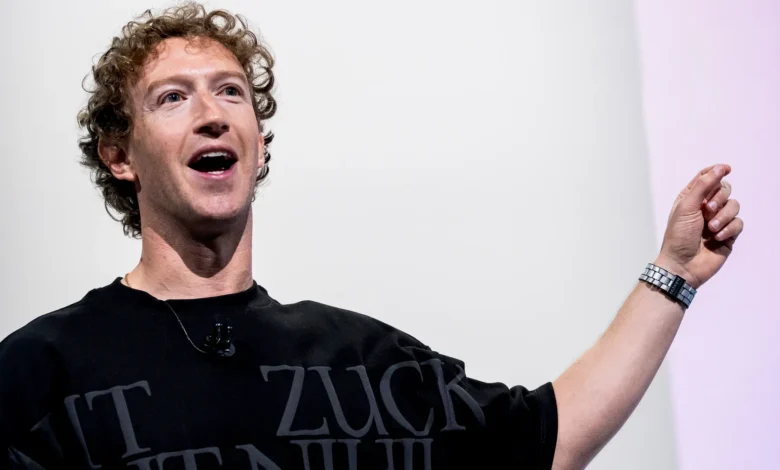
For decades, Silicon Valley has been captivated by a seductive myth: the brilliant college dropout who abandons academia to build a world-changing company. From Steve Jobs leaving Reed College to Bill Gates stepping away from Harvard, and Mark Zuckerberg exiting before completing his degree, these stories have become foundational legends of the technology industry.
Yet behind the mythology lies a less glamorous reality. Numerous academic studies and venture capital analyses consistently show that the majority of successful startup founders hold at least a bachelor’s degree, and many possess graduate-level education. Completion—not abandonment—of higher education remains the statistical norm among founders who build enduring, large-scale companies.
Despite this data, the dropout narrative refuses to fade. Instead, it moves in cycles—surging during moments of technological disruption and retreating during periods of consolidation. Today, amid the explosive rise of artificial intelligence, that narrative is once again enjoying a resurgence.
Nowhere is this more visible than at Y Combinator Demo Days, where founders have only one minute to pitch their startups. Increasingly, those minutes include an unexpected credential: not where founders studied, but the fact that they left.
Dropping Out as a Badge of Conviction
“I don’t believe YC formally tracks dropout status,” said Katie Jacobs Stanton, founder and general partner at Moxxie Ventures. “But anecdotally, in recent batches, I was struck by how many founders highlight being a dropout from college, graduate school, and even high school.”
According to Stanton, dropping out has taken on symbolic value in the venture ecosystem. “Being a dropout is a kind of credential in itself,” she said. “It signals deep conviction, urgency, and a willingness to take risk. I think it’s perceived as something quite positive.”
In a world where founders compete not just on ideas, but on narratives, the dropout story has become shorthand for obsession and belief. It suggests that the founder is so convinced of their vision that they are willing to sacrifice the safety and prestige of a diploma to pursue it.
This perception has gained traction alongside the AI boom, where the pace of innovation feels relentless and the fear of missing the next foundational wave is acute.
The AI Urgency and the Fear of Missing the Window
Artificial intelligence has created an environment unlike previous tech cycles. Models evolve rapidly, tools are commoditized almost overnight, and first-mover advantages appear fleeting yet crucial. For young builders, particularly students at elite universities, this has generated a sense of urgency bordering on panic.
“There’s just this sense of urgency and maybe FOMO,” said Kulveer Taggar, founder of the YC-focused venture firm Phosphor Capital. “There’s a calculation happening right now: ‘I can finish my degree, or I can just start building.’”
For some students, that calculation tips decisively toward leaving school.
One high-profile example is Brendan Foody, co-founder of Mercor, who dropped out of Georgetown University to pursue his startup full-time. His decision, widely discussed in startup circles, has become emblematic of a broader trend among aspiring AI founders who believe that timing—not credentials—is the most valuable asset.
The underlying fear is simple: graduate too late, and the AI gold rush will be over.
Extreme Decisions, Extreme Beliefs
That fear has begun to manifest in increasingly extreme behavior.
One professor at an elite university recently described a student who walked away from his degree in his final semester. The student believed that graduating might actually harm his fundraising prospects.
The logic, though controversial, reflects a growing anxiety among young founders: that finishing school signals hesitation, caution, or lack of total commitment. In some corners of the startup ecosystem, the diploma itself has begun to feel like a liability rather than an asset.
This belief, however, is far from universally accepted.
What Investors Actually Think About Dropouts
Despite the growing visibility of dropout founders, many venture capitalists say they are far less fixated on educational status than founders assume.
“I don’t think I’ve ever felt any different about someone who graduated or didn’t graduate when they’re in their fourth year and drop out,” said Yuri Sagalov, who leads General Catalyst’s seed-stage strategy.
For investors like Sagalov, the distinction between graduating and leaving school late is largely irrelevant. What matters more is the founder’s ability to execute, recruit talent, and navigate uncertainty.
Still, Sagalov argues that universities offer value even if founders never receive a diploma.
“There’s social value and brand value,” he said. “You get a lot of that just by participating. Most people will look you up on LinkedIn and not care as much whether you finished or not.”
In other words, founders may already extract the most meaningful benefits of higher education—networks, credibility, exposure—long before graduation day.
The Data Tells a Different Story
While anecdotes dominate headlines, data paints a more nuanced picture.
Multiple studies have shown that founders with college and graduate degrees are statistically more likely to build companies that survive, scale, and exit successfully. Education correlates with access to networks, structured problem-solving, and long-term strategic thinking—skills that become increasingly important as companies mature.
Even in the AI sector, many of the most prominent founders chose to complete their education.
Michael Truell, CEO of Cursor, graduated from MIT. Scott Wu, co-founder of Cognition, is a Harvard graduate. Numerous leaders behind foundational AI tools followed traditional academic paths before launching their companies.
Their success challenges the idea that graduation and innovation are mutually exclusive.
The Myth Versus the Reality
The dropout myth persists not because it is common, but because it is compelling.
Stories of leaving school to build billion-dollar companies are easy to tell, easy to romanticize, and easy to remember. Stories of founders quietly finishing their degrees before building successful startups rarely inspire the same fascination.
Yet venture capitalists and seasoned operators warn that romanticizing dropout culture can distort incentives, particularly for young founders still developing their judgment.
The Question of Wisdom
Not all investors are enthusiastic about the renewed dropout trend.
Wesley Chan, co-founder of FPV Ventures, has expressed skepticism toward investing in very young founders who leave school early.
“I prioritize wisdom,” Chan said. “And wisdom is usually found in older founders or people who have a couple of scars under their belt.”
In Chan’s view, technical skill and ambition are not enough. Experience—particularly experience gained through failure, responsibility, and time—is a critical ingredient that many young founders have yet to acquire.
This perspective reflects a broader concern within parts of the venture community: that speed is being overvalued at the expense of judgment.
When Dropping Out Makes Sense—and When It Doesn’t
Few investors argue that founders must finish college to succeed. Instead, the more common view is that dropping out is a situational decision, not a universal strategy.
For founders with:
-
strong traction,
-
paying customers,
-
committed co-founders, and
-
investor support,
leaving school may be a rational trade-off.
But for others, dropping out in anticipation of success—rather than in response to it—can be risky.
The danger lies in confusing symbolism with substance. A dropout story may attract attention, but it does not replace product-market fit, technical excellence, or leadership capability.
A Cycle That Keeps Repeating
The rise of the dropout founder during the AI boom is not unprecedented. Similar waves appeared during:
-
the dot-com era,
-
the rise of social media,
-
and the early days of mobile computing.
Each time, urgency increased, timelines compressed, and founders feared missing the moment. Each time, the industry eventually recalibrated.
History suggests that while some dropouts will indeed build extraordinary companies, most successful founders will continue to follow less dramatic paths—including finishing school.
The Enduring Value of Choice
Ultimately, the debate over dropping out versus graduating reflects a deeper tension in startup culture: the balance between speed and preparation, conviction and patience, myth and reality.
The AI boom has intensified that tension, pushing young founders to make life-altering decisions earlier than ever before. But as investors repeatedly emphasize, there is no single formula for success.
Dropping out is neither a shortcut nor a guarantee. It is simply one choice among many—one that carries both risks and rewards.
As the AI cycle matures, the industry may once again rediscover what the data has long suggested: that innovation does not require abandoning education, and education does not preclude innovation.
And when the hype fades, what will remain—as it always has—are the fundamentals: insight, execution, resilience, and wisdom.