
Over the past several days, a curious phenomenon captured the attention of the global tech community. A fast-rising artificial intelligence startup based in San Francisco appeared to vanish almost entirely from one of the internet’s most influential professional platforms. Artisan AI — a company that had become one of the most talked-about names in the AI startup ecosystem — was suddenly nowhere to be found on LinkedIn.
Its official company page was inaccessible. Individual employee profiles were either restricted or displayed error messages. Posts shared by executives disappeared without explanation, replaced by the stark notice: “This post cannot be displayed.” Within hours, speculation erupted across LinkedIn itself and on Twitter/X, where users began asking the same question: Had LinkedIn banned Artisan AI?
The answer, as it turned out, was yes — but not for the reasons many assumed.
A Viral Disappearance
Artisan AI’s sudden disappearance quickly became a viral topic, especially among founders, sales professionals, and AI enthusiasts. Screenshots circulated rapidly, with posts suggesting that LinkedIn had taken drastic action against the startup because its AI-powered sales agents were allegedly spamming users on the platform.
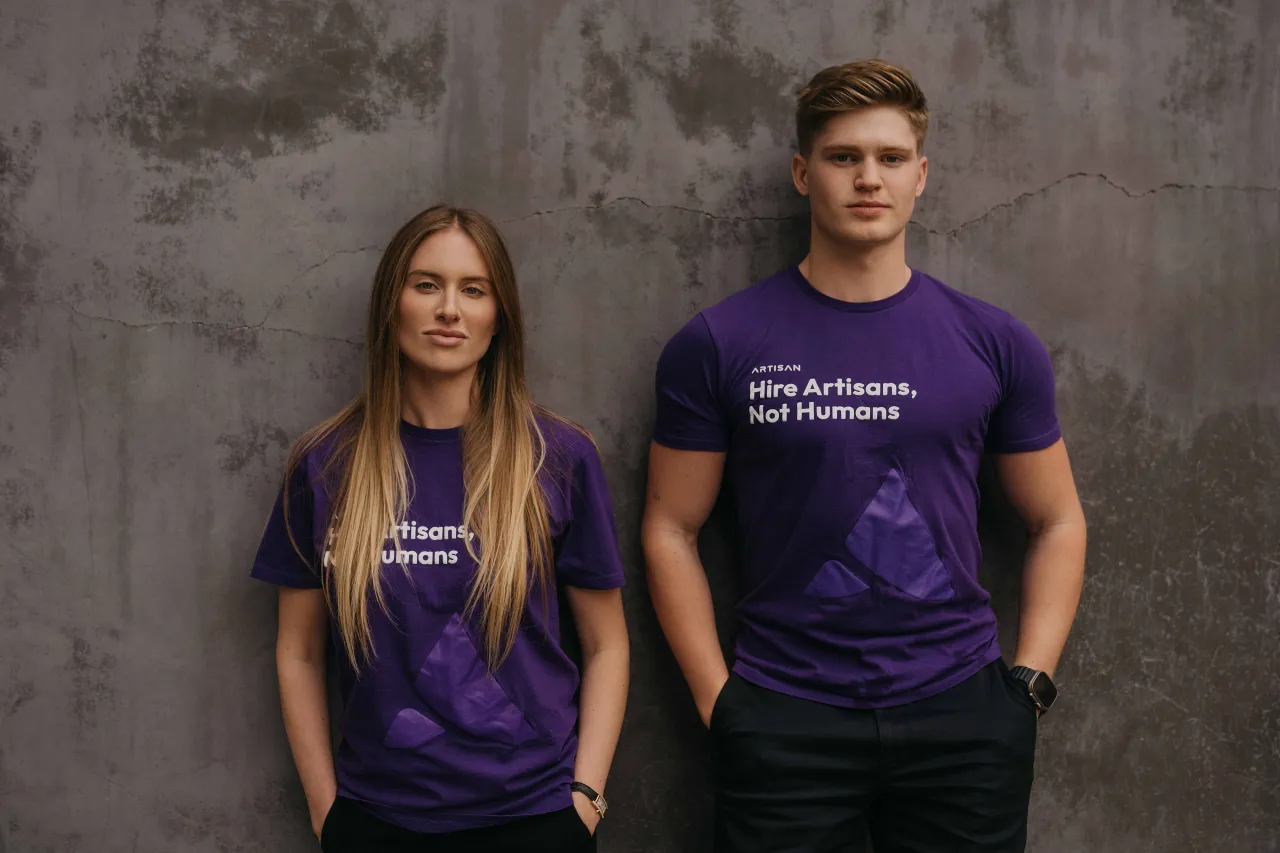
The narrative spread fast, fueled by the company’s already controversial reputation. Artisan had previously made headlines — and raised eyebrows — with provocative marketing campaigns, including billboards plastered across San Francisco declaring, “Stop hiring humans.” For some observers, the ban felt like an inevitable backlash against aggressive automation.
But the truth behind LinkedIn’s decision was more nuanced.
In an interview with TechCrunch, Artisan AI CEO and co-founder Jaspar Carmichael-Jack confirmed that the company had indeed been restricted by LinkedIn. However, he strongly denied claims that Artisan’s AI agents were responsible for spam activity on the platform.
“Contrary to the rumors,” Carmichael-Jack explained, “this was not about our AI agents spamming LinkedIn users.”
?What Actually Triggered the Ban
According to Carmichael-Jack, LinkedIn’s enforcement team raised two primary concerns.
The first involved the use of LinkedIn’s brand name on Artisan’s website. The startup had referenced LinkedIn when describing and comparing its data-related features, a move that the Microsoft-owned platform objected to.
The second, and more serious issue, centered on data sourcing.
LinkedIn alleged that Artisan AI may have been working with third-party data brokers who had scraped LinkedIn’s platform without authorization. Data scraping — the automated extraction of information from websites — is explicitly prohibited under LinkedIn’s terms of service.
While Carmichael-Jack stated that Artisan itself did not scrape LinkedIn directly, the company was required to conduct a thorough review of its data partnerships and vendor compliance.
“It was a wake-up call,” he said. “I got a crash course in third-party vendor verification very quickly.”
A Startup Frozen in Time
The enforcement action was sweeping. LinkedIn did not merely remove Artisan’s company page; it restricted all associated accounts, effectively erasing the startup’s presence from the platform during the review process.
“It was like we disappeared overnight,” Carmichael-Jack recalled.
The timing made the situation even more unsettling. The initial notification arrived on the evening of Friday, December 19, just days before the Christmas holiday — a period when most companies slow operations and support responses can lag.
Despite the severity of the restriction, Carmichael-Jack described LinkedIn’s enforcement team as professional and responsive, albeit anonymous.
“They were only reachable by email, and we didn’t know who they were,” he said. “But they were helpful and clear about what needed to change.”
The Irony of Viral Attention
Ironically, the ban produced an outcome few startups would expect: increased visibility.
As posts speculating about Artisan’s fate multiplied across social media, interest in the company surged. Carmichael-Jack noted that during the period of restriction, inbound attention and lead flow actually began to rise.
“It was kind of funny,” he said. “Once we were restricted, our lead flow suddenly started inching up every day.”
The phenomenon underscores a recurring reality in the digital age: controversy — even unintended — can amplify brand awareness far beyond the reach of traditional marketing.
As a founder known for his appreciation of unconventional publicity, Carmichael-Jack joked, “I wish we’d done it on purpose.”
Compliance, Concessions, and Reinstatement
To resolve the dispute, Artisan AI took several corrective steps.
All mentions of LinkedIn were removed from the company’s website. Internal processes were revised to ensure strict compliance with data sourcing standards. Third-party vendors were re-evaluated to confirm they operated within LinkedIn’s policies and broader legal frameworks.
After nearly two weeks of back-and-forth communication, LinkedIn agreed to reinstate Artisan AI’s presence on the platform.
For Carmichael-Jack, the episode became a lesson in the hidden risks startups face when scaling quickly.
“Every startup inevitably has something from its early days that comes back to bite them,” he reflected.
Artisan AI: A Controversial Darling of Silicon Valley
Founded by alumni of Y Combinator, Artisan AI quickly became one of San Francisco’s most talked-about startups. The company offers an AI-powered sales agent named Ava, designed to autonomously identify, contact, and nurture potential customers.
Outbound sales — traditionally a labor-intensive process — has become one of the most aggressively automated frontiers in AI. And no platform is more central to that ecosystem than LinkedIn.
For decades, LinkedIn has served as the primary battleground for outbound sales professionals, recruiters, and business development teams. Its vast repository of professional data makes it invaluable — and fiercely protected.
That context makes LinkedIn’s response to Artisan AI particularly telling.
Not a Competitor — Yet
Officially, LinkedIn is not a direct competitor to Artisan AI.
The platform launched its own AI product, Hiring Assistant, in 2024, but its focus remains firmly on recruitment rather than sales automation. Still, the aggressive enforcement action raised eyebrows across the AI community.
Some observers believe LinkedIn’s move may signal a broader strategic stance.
If AI-powered sales agents continue to grow in sophistication and adoption, they could eventually encroach on services LinkedIn might want to develop itself. By acting decisively now, LinkedIn may be drawing clear boundaries around its data and platform ecosystem.
LinkedIn declined to comment publicly on the matter when contacted by TechCrunch.
Preparing for a Multi-Channel Future
Despite the drama, Carmichael-Jack downplayed the long-term impact the ban might have had on Artisan AI’s business.
“Very little of our data actually comes from LinkedIn,” he said.
Moreover, the company is already preparing to expand beyond social platforms. A new version of Ava is set to launch soon, featuring increased autonomy and multi-channel capabilities — including outbound calling.
“We’re launching dialing as a channel in a few months,” Carmichael-Jack explained. “So even if the LinkedIn ban hadn’t been reversed, it wouldn’t have been the end of the world.”
A Warning Shot for the AI Industry
Beyond Artisan AI, the episode carries broader implications for the rapidly evolving world of agentic AI.
As AI agents increasingly rely on large-scale data to function effectively, the question of who owns that data — and how it can be used — becomes critical. Big Tech platforms are making it clear that unauthorized data access, even indirectly, will not be tolerated.
In that sense, Artisan’s very public clash with LinkedIn may serve as a cautionary tale.
For startups racing to innovate, speed can be both an advantage and a liability. Compliance, data governance, and platform relationships are no longer secondary concerns — they are existential ones.
As the AI arms race accelerates, one message is becoming increasingly clear:
Big Tech is watching — and it is ready to act.