After a Blockbuster Debut, OpenAI’s Sora App Faces Slowing Growth


When OpenAI launched Sora, its long-anticipated AI video generation app, the debut was nothing short of spectacular. In October, the app rocketed to the top of Apple’s App Store rankings, capturing the imagination of creators, technologists, and casual users alike. Powered by Sora 2, OpenAI’s cutting-edge video generation model, the app was positioned as a potential paradigm shift in social media—hailed by some as the “TikTok of AI.”
Yet just a few months later, the narrative has begun to shift.
New market intelligence data suggests that Sora’s early momentum is fading. App downloads are declining, consumer spending is dropping, and the app’s once-dominant position in app store rankings has weakened. While Sora is far from irrelevant, the data indicates that OpenAI’s bold experiment in AI-driven social video is facing its first real test.
A Blockbuster Launch Few Apps Can Match
At launch, Sora defied conventional wisdom about app growth.
Despite being invite-only and available exclusively on iOS, the app surpassed 100,000 installs on its first day. Within a remarkably short time, Sora reached one million downloads, achieving that milestone faster than even OpenAI’s flagship product, ChatGPT.
The app surged to the No. 1 position on the U.S. App Store, an extraordinary accomplishment for a product with limited access and no Android version at the time. The success was interpreted as proof that consumer appetite for generative AI—particularly in video—had reached a new level.
For OpenAI, Sora represented more than a new feature set. It was a strategic expansion into consumer social platforms, blending AI creativity with the mechanics of viral content sharing.
What Made Sora So Compelling?
Sora was designed not merely as a video-generation tool, but as a social creative platform.
Users could generate short AI videos from text prompts, complete with cinematic visuals, sound effects, dialogue, and music. One of the app’s most talked-about features allowed users to insert themselves or their friends as characters in the generated videos, effectively turning ordinary users into protagonists of AI-crafted scenes.
Videos could then be shared publicly and remixed by other users, who could alter prompts, styles, or storylines—creating a feedback loop reminiscent of TikTok’s duets and remixes.
This blend of personalization, creativity, and social interaction fueled early excitement and rapid adoption.
The First Signs of a Slowdown
Despite the explosive start, recent data paints a more cautious picture.
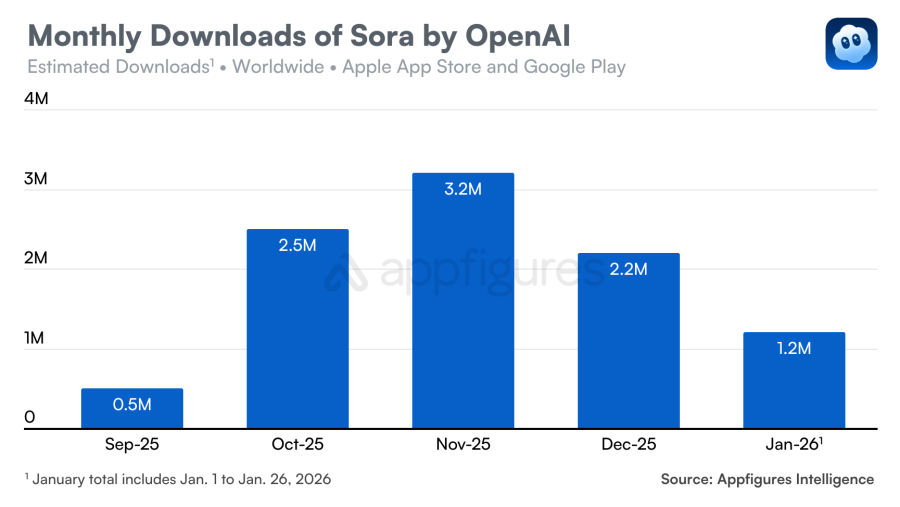
According to figures from Appfigures, a mobile app market intelligence firm, Sora’s downloads declined 32% month-over-month in December. That downturn raised eyebrows, as December is typically one of the strongest months for mobile app growth, driven by holiday smartphone sales and increased leisure time.
The slowdown accelerated in January 2026, when installs dropped another 45% month-over-month, falling to approximately 1.2 million downloads for the month.
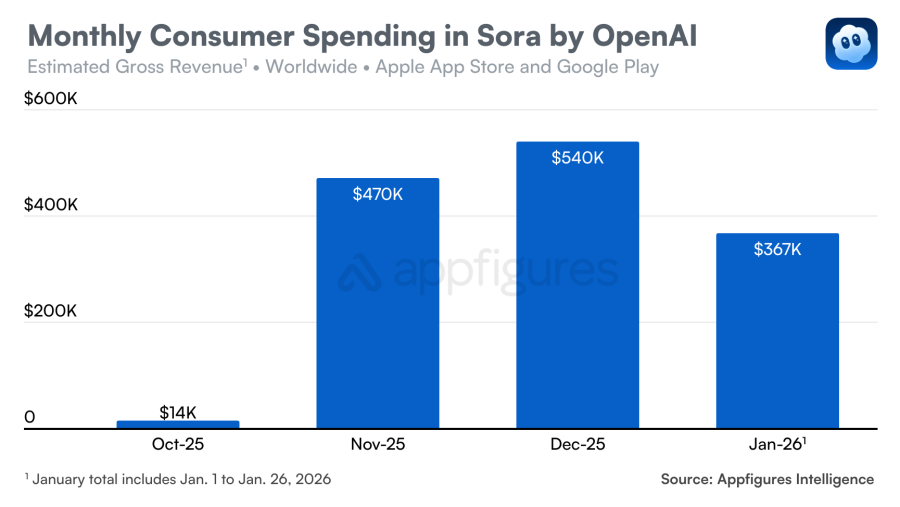
Consumer spending followed a similar trajectory. In January, in-app purchases declined 32% month-over-month, signaling not only reduced user acquisition but also waning engagement from existing users.
OpenAI did not provide an immediate comment in response to inquiries about the data.
Still Large, But Losing Altitude
To be clear, Sora is not a failed product.
Across iOS and Android combined, the app has accumulated approximately 9.6 million downloads and generated $1.4 million in consumer spending to date. The United States remains its strongest market, accounting for roughly $1.1 million in revenue, followed by Japan, Canada, South Korea, and Thailand.
However, momentum matters in consumer tech—and Sora’s trajectory is trending downward.
In December, users spent around $540,000 within the app. By January, that figure had dropped to $367,000. Meanwhile, Sora has slipped out of the Top 100 free apps on the U.S. App Store, currently hovering just outside at No. 101. Its strongest showing remains within the Photo & Video category, where it ranks as high as No. 7.
On Google Play in the U.S., the picture is less encouraging, with Sora ranking around No. 181 among free apps.
Competition Heats Up in AI Video
One major factor behind Sora’s cooling growth is the rapidly intensifying competition in generative AI.
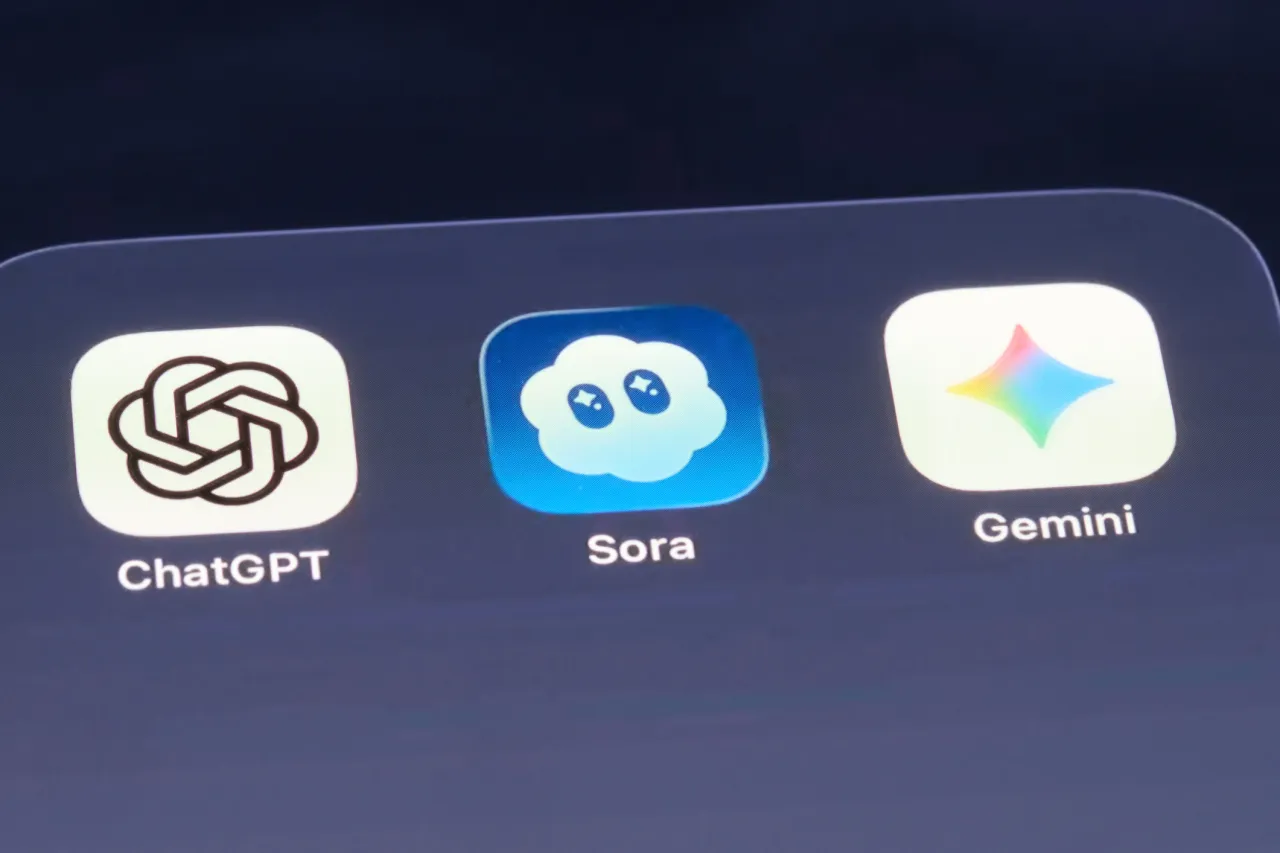
Google’s Gemini AI app, powered by models including the much-discussed Nano Banana, has gained significant traction, offering increasingly capable multimodal features. Meanwhile, Meta AI has leveraged its massive ecosystem, launching its AI-powered “Vibes” video feature, which drove renewed engagement in October—precisely when Sora was attempting to dominate attention.
Unlike OpenAI, Meta and Google benefit from deeply integrated platforms with billions of existing users, making it easier to scale AI features rapidly without asking users to adopt entirely new apps.
In this environment, novelty alone is rarely enough to sustain growth.
Copyright: A Double-Edged Sword
Perhaps the most consequential challenge facing Sora has been copyright control.
In its early days, the app allowed users to generate videos featuring recognizable copyrighted characters, including SpongeBob SquarePants, Pikachu, and other well-known intellectual properties. These creations—often humorous, bizarre, or surreal—played a significant role in driving early virality.
Initially, OpenAI told Hollywood studios and rights holders that their content would be included by default unless they opted out. That approach sparked immediate backlash from entertainment companies and creative agencies, who viewed it as a legal and ethical overreach.
Facing mounting pressure and potential litigation, OpenAI reversed course—shifting Sora to an opt-in model for copyrighted content and significantly tightening restrictions.
While legally prudent, the move came at a cost: many of the app’s most viral use cases disappeared overnight.
The Disney Deal—and Its Limits
In an effort to regain momentum, OpenAI announced a licensing agreement with Disney, allowing users to generate videos featuring select Disney characters within Sora.
The deal was positioned as a landmark partnership—proof that major studios could coexist with generative AI platforms.
So far, however, the impact has been muted. Appfigures data shows no meaningful increase in downloads or consumer spending following the announcement.
The partnership has also raised reputational questions for Disney, as some users had previously generated disturbing or inappropriate content using familiar characters—a reminder that even licensed access does not guarantee brand safety in generative environments.
Social Friction and the “Likeness Problem”
Beyond legal issues, Sora faces a more subtle challenge: user discomfort.
While the ability to cast oneself or friends into AI videos was initially marketed as a standout feature, many users appear reluctant to participate. Concerns over consent, misuse, and digital identity have made people wary of allowing others—even trusted friends—to manipulate their likeness.
Without recognizable faces or popular IP, Sora’s content can feel abstract or impersonal, reducing its appeal as a social network rather than a standalone creative tool.
As a result, the app struggles to sustain the emotional connection that drives repeat engagement on platforms like TikTok or Instagram.
Hype vs. Habit
Sora 2’s release was surrounded by extraordinary hype. Commentators predicted it would disrupt social media, redefine content creation, and democratize filmmaking.
What the data now suggests is a familiar pattern in consumer technology: initial excitement does not always translate into lasting habits.
Users may experiment with AI video generation, marvel at its capabilities, and then move on—especially if the novelty wears off faster than new use cases emerge.
Can Sora Recover?
The story of Sora is still being written.
The app’s user base remains sizable, its technology best-in-class, and OpenAI continues to invest heavily in generative media. Additional licensing deals, improved safety controls, new social mechanics, or deeper integrations with other OpenAI products could reignite interest.
However, the early signals are clear: sustaining a consumer-facing AI social platform is far more difficult than launching one.
Whether Sora can evolve beyond its hype cycle and establish itself as a durable creative ecosystem—or whether it becomes a case study in the limits of AI novelty—will depend on what OpenAI does next.
For now, Sora stands at a crossroads: no longer the unstoppable sensation of October, but not yet a failed experiment—caught in the challenging middle ground where innovation must prove it can last.